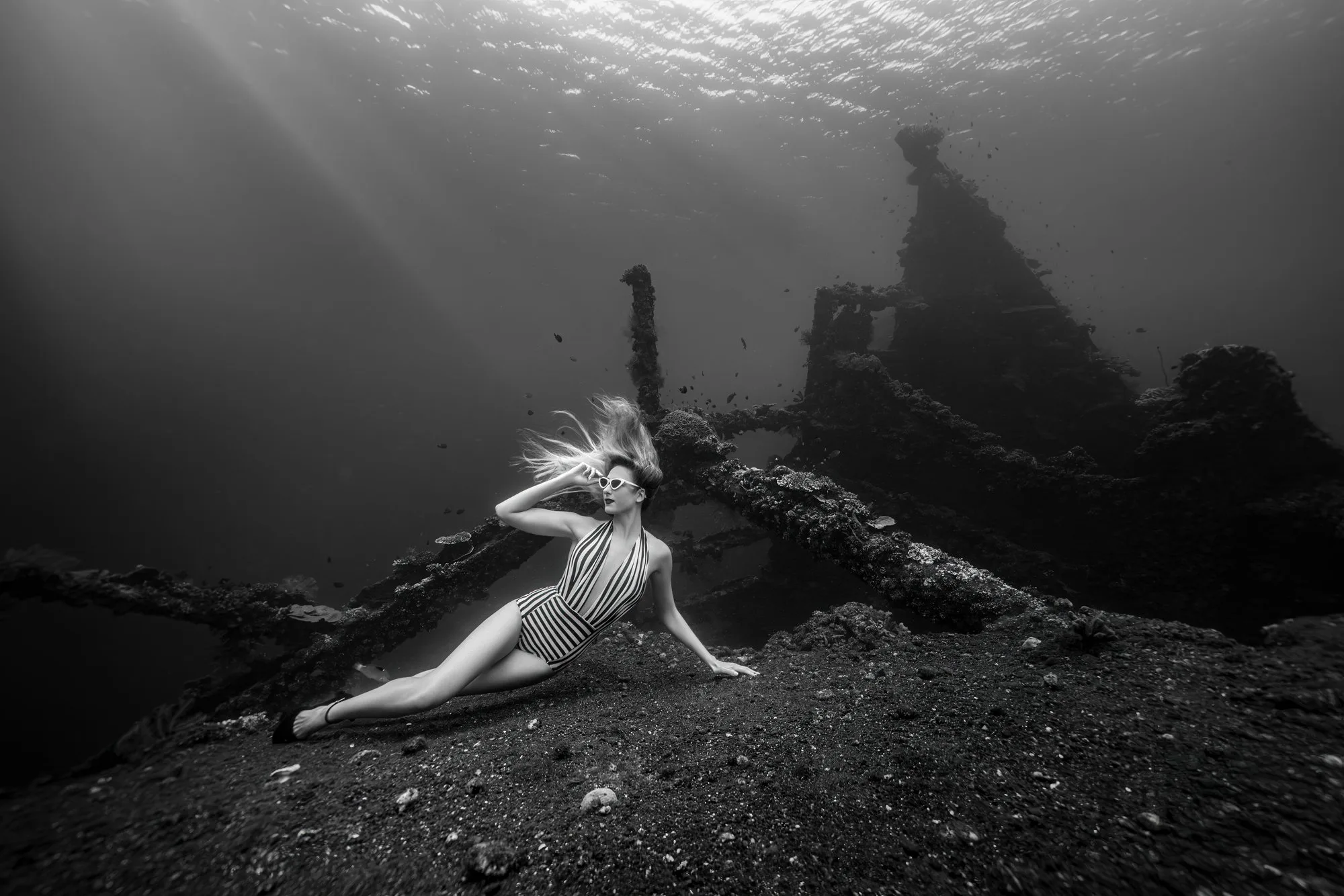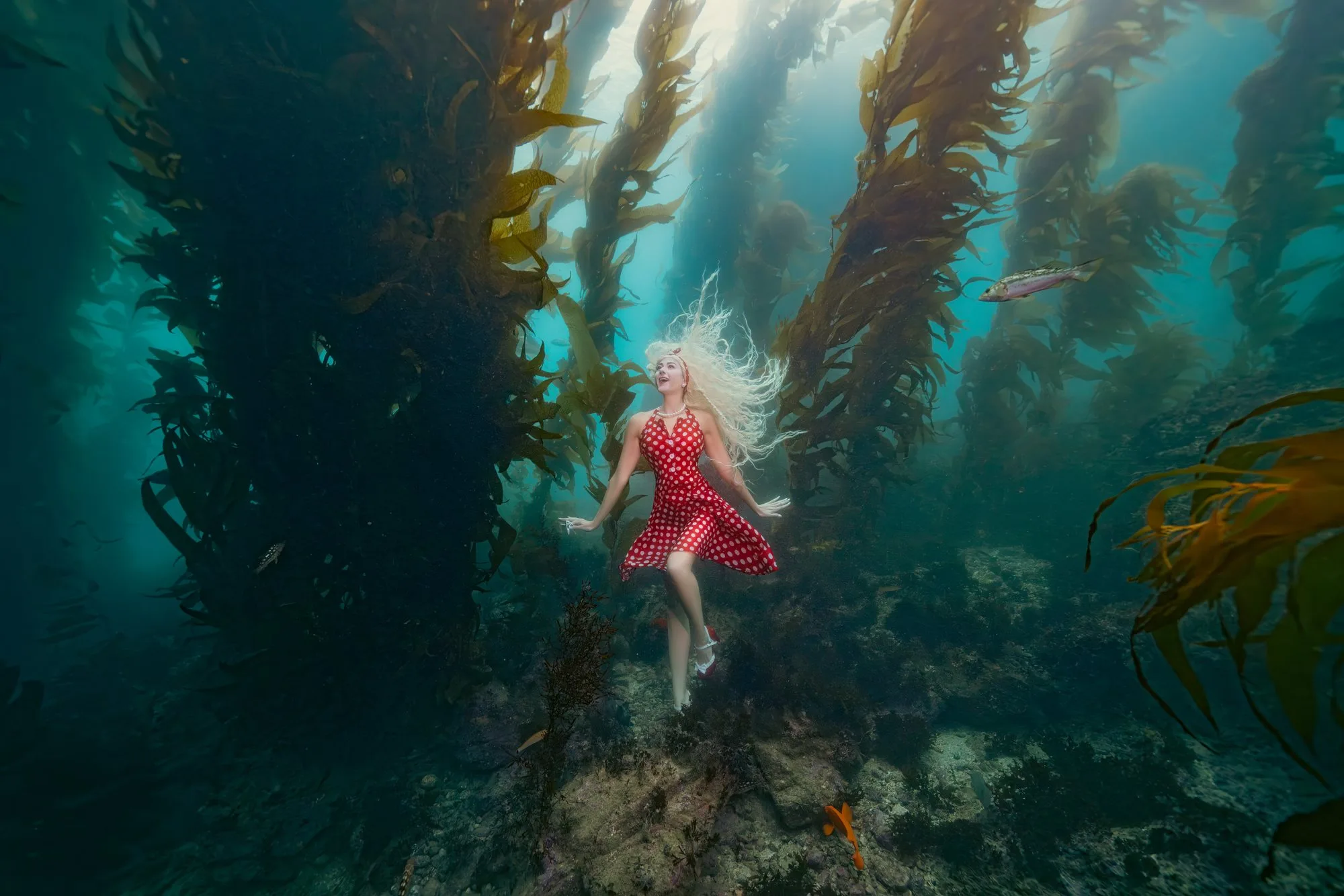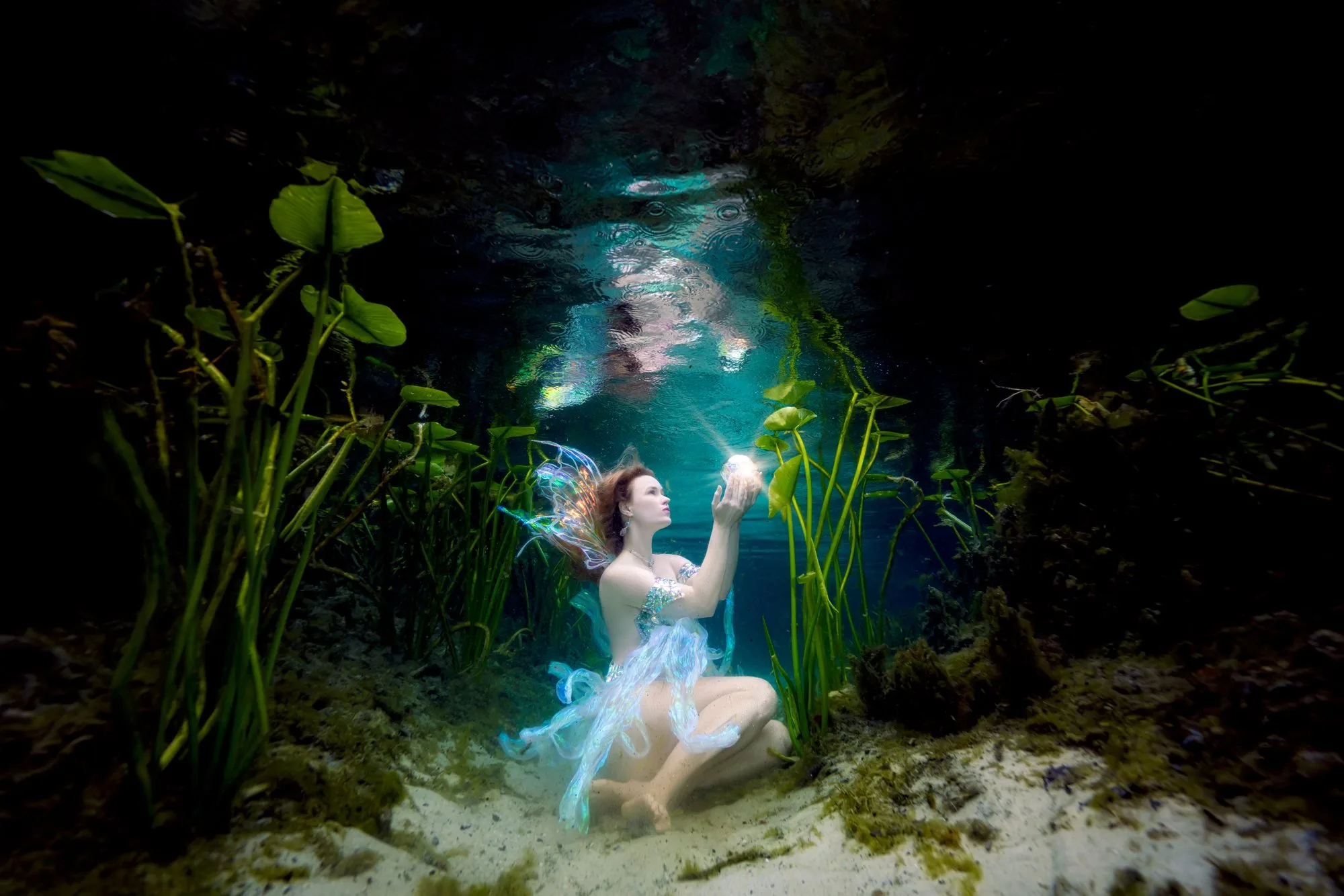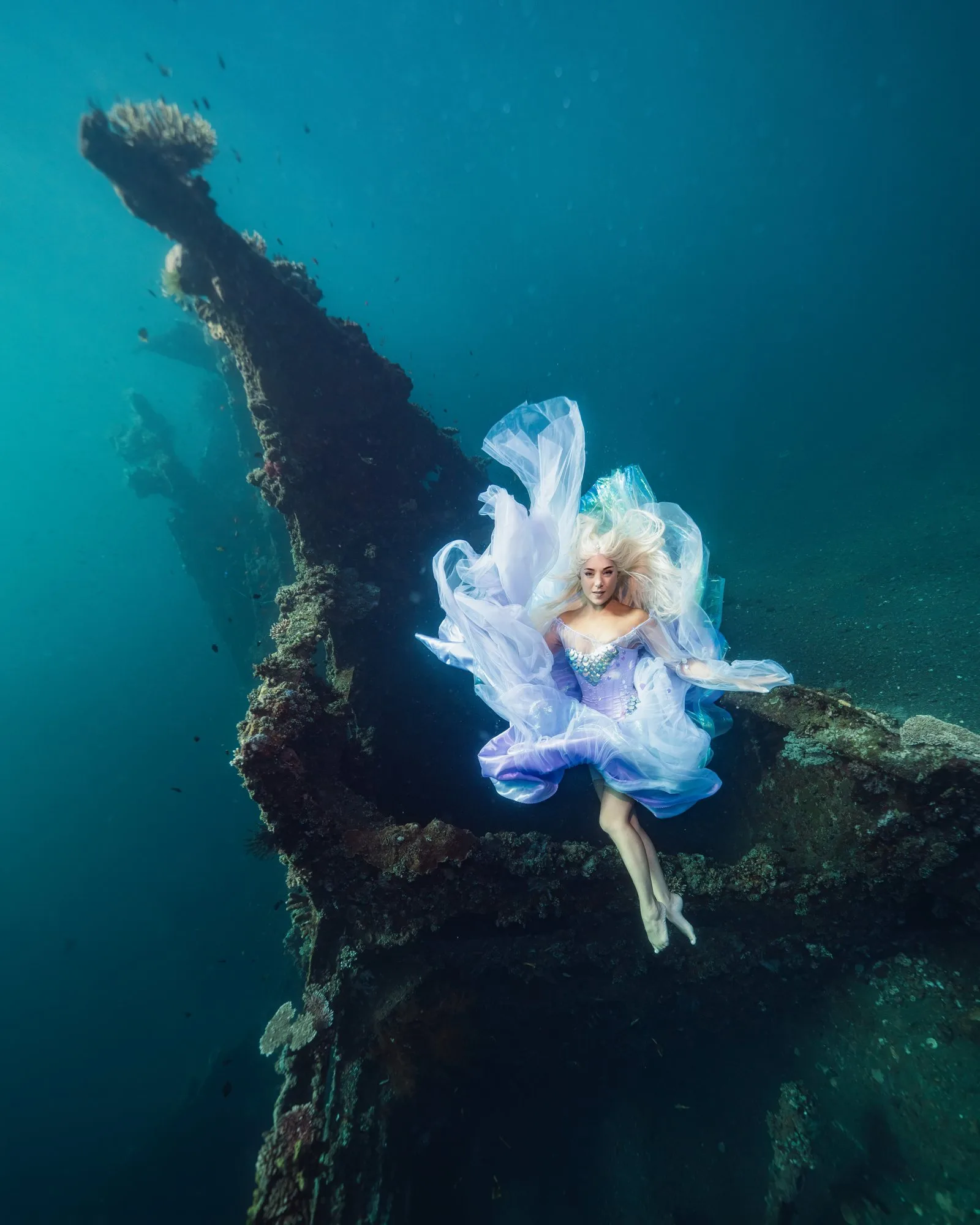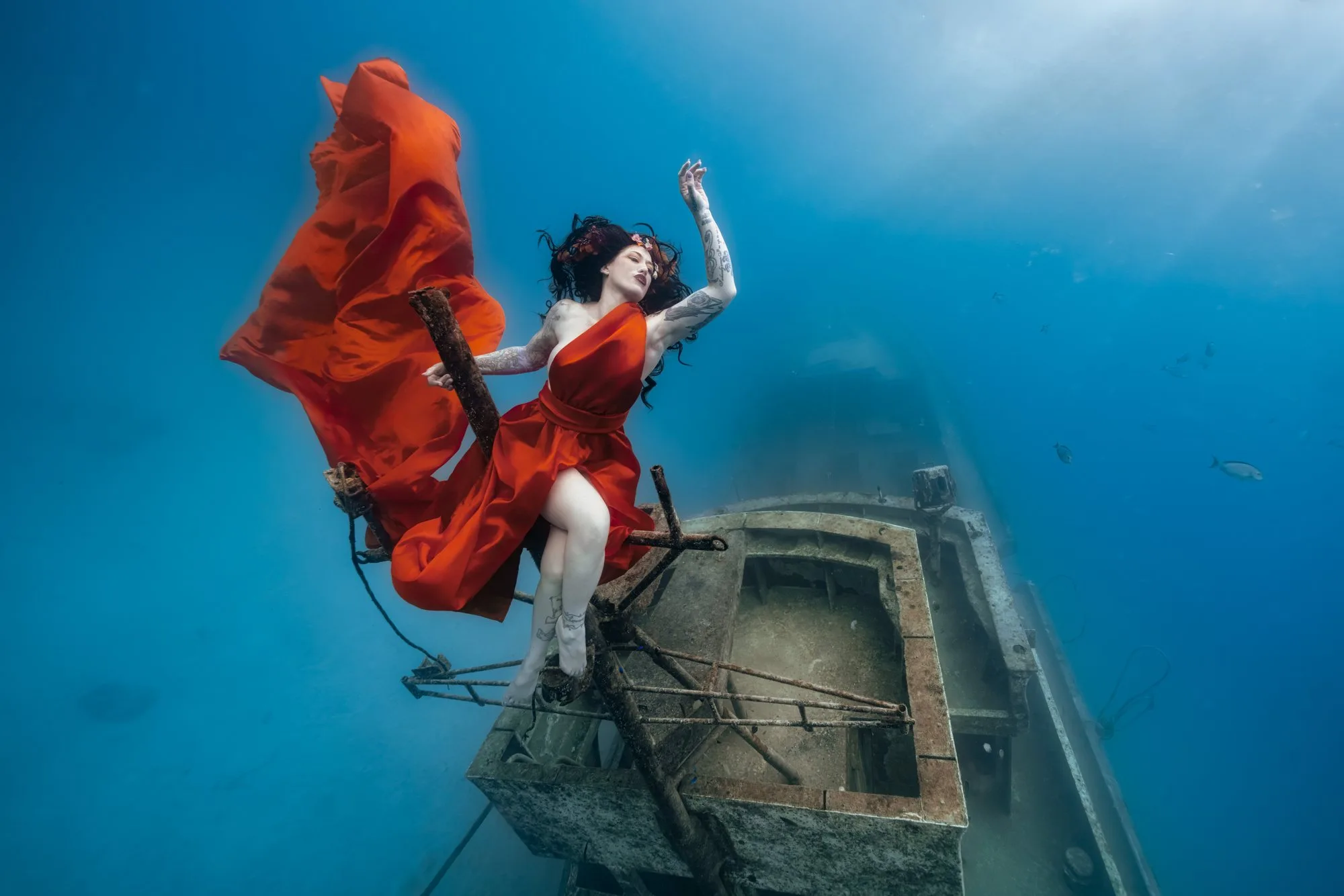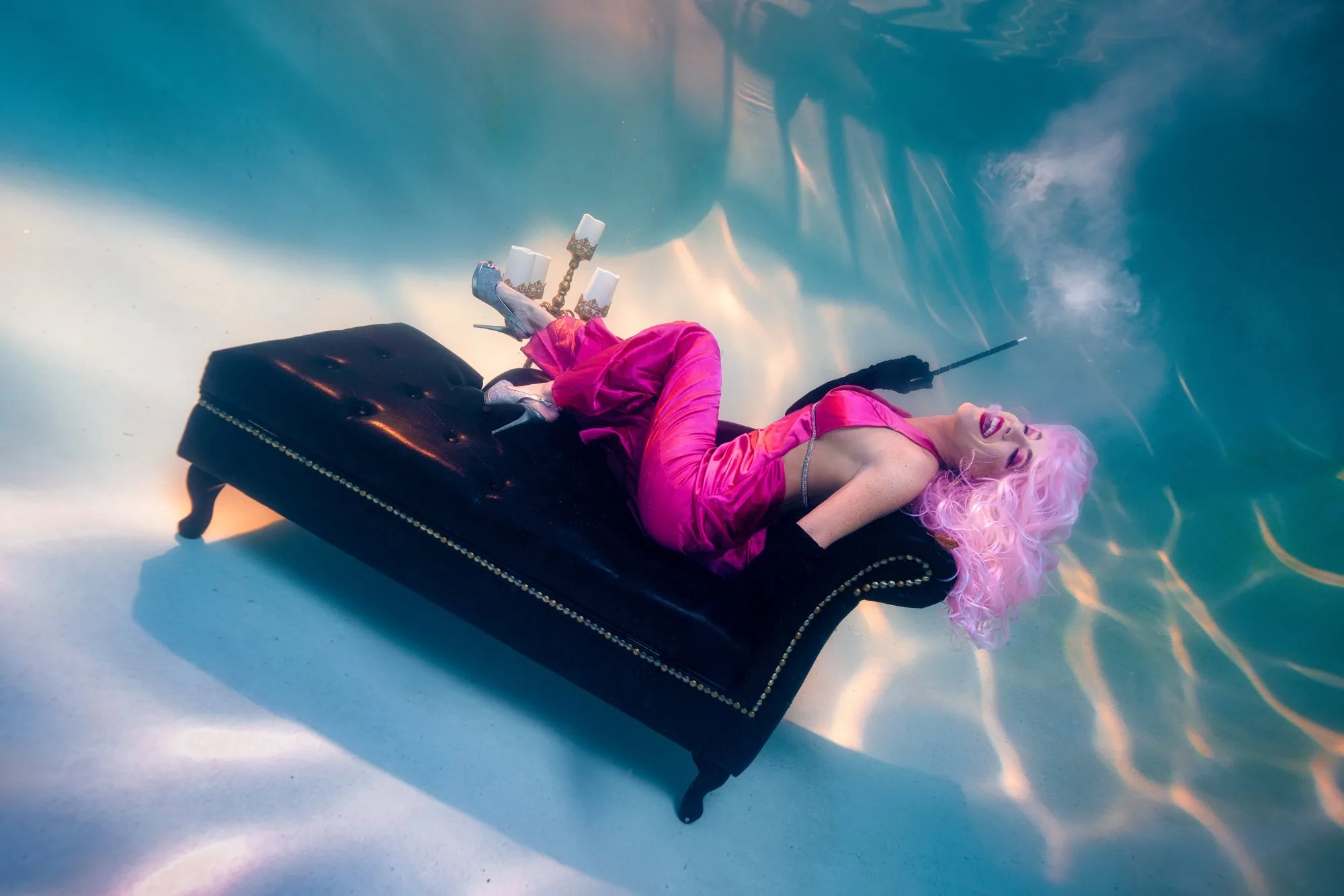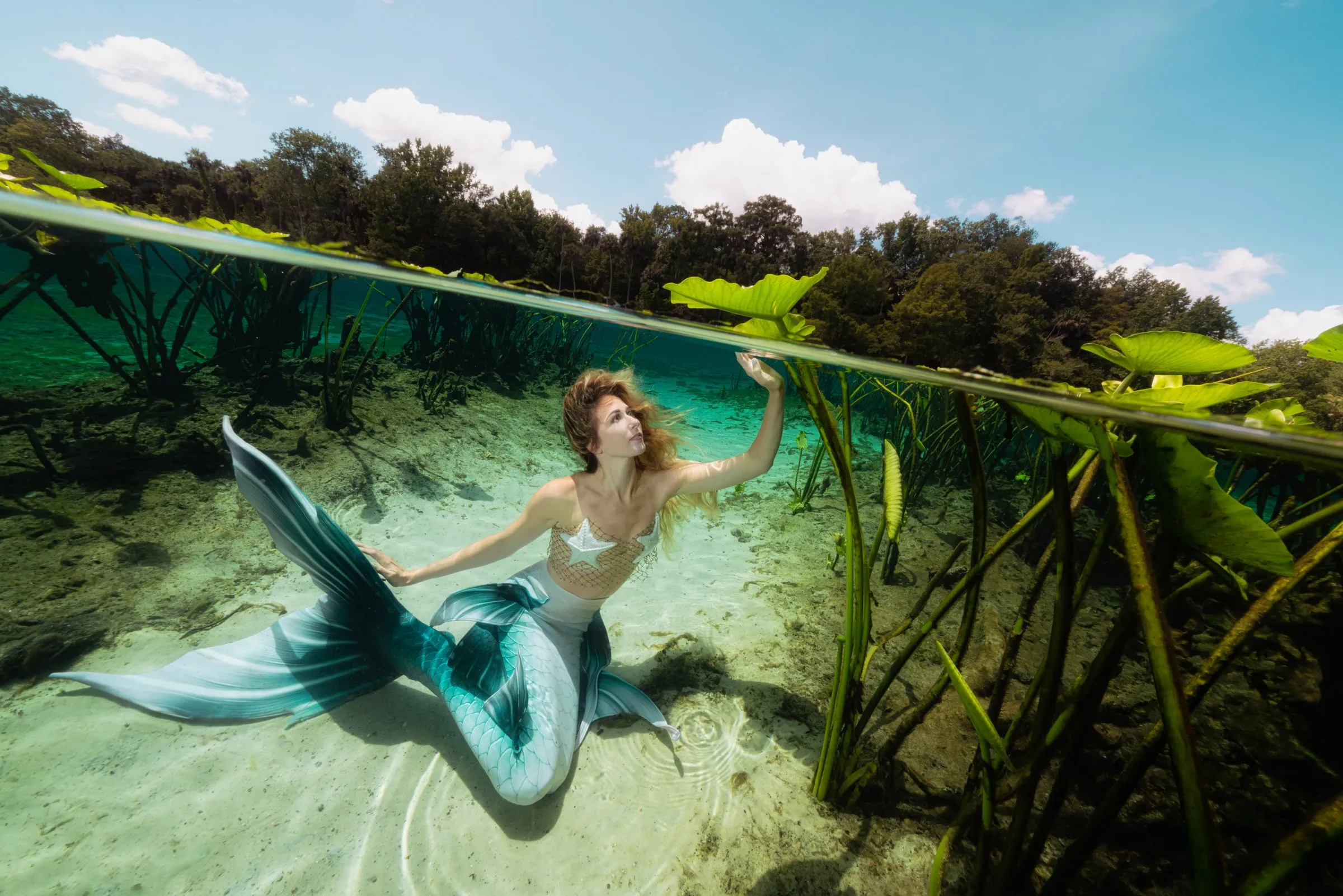
What most people tell us
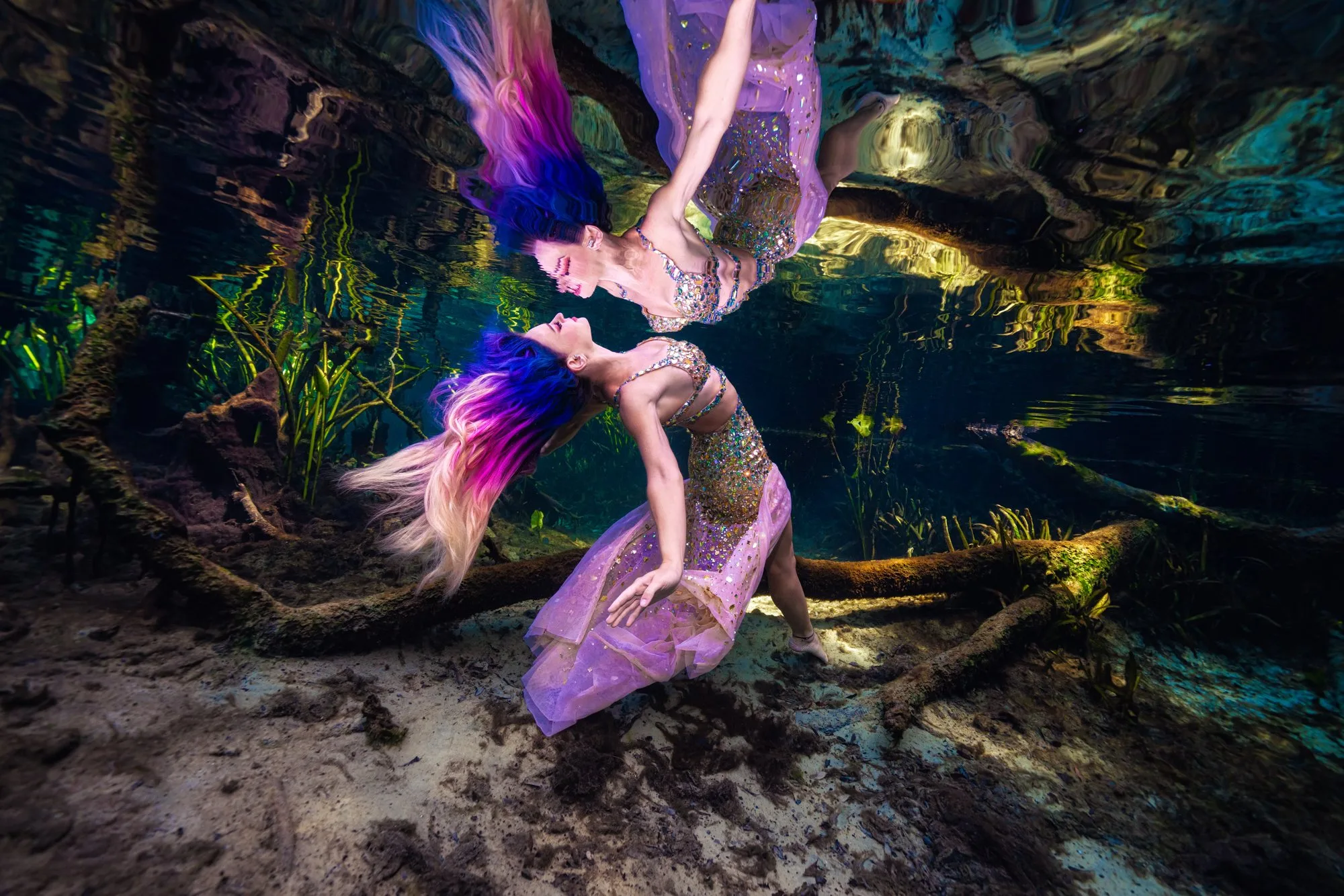
Most people who book with us have never done anything like this before, and nearly all of them tell us the same two things when they get out: it was far easier than they expected, and they had no idea they could look that good in a photograph. Abbey is in the water beside you the whole time, coaching the breath-hold and the posing, and she has coached first-timers for years. Justin shoots, and talks you through each frame between shots.
If you’re already a model, a mermaid or an underwater performer, we dive right in and spend the session building portfolio work. Either way, we plan the session with you on a call before the day, down to the creative details.
Plan your looks with us
Bring whatever is in your head: photos you love, a character, a color, an outfit you already own. If all you have is a sentence, that’s plenty, and the call is where it turns into a plan. Looks change with the session: a gown for a bridal or maternity portrait, a character for fantasy and cosplay, a tail for mermaid, flowing fabric or lingerie for boudoir, a built world for a concept shoot, the apparatus you train on for aerial. We decide the looks with you before the day, and how many you shoot depends on the session you book.
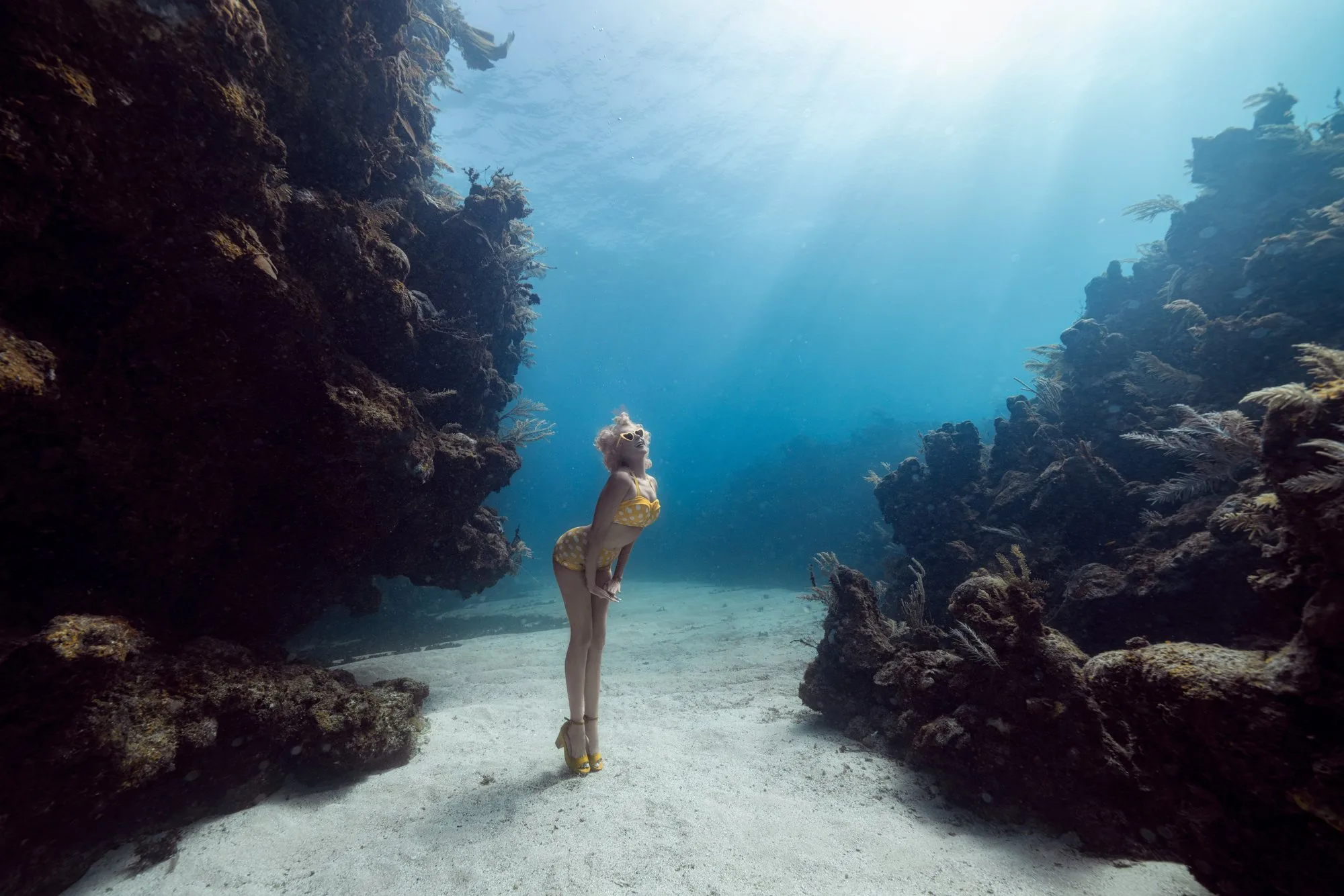
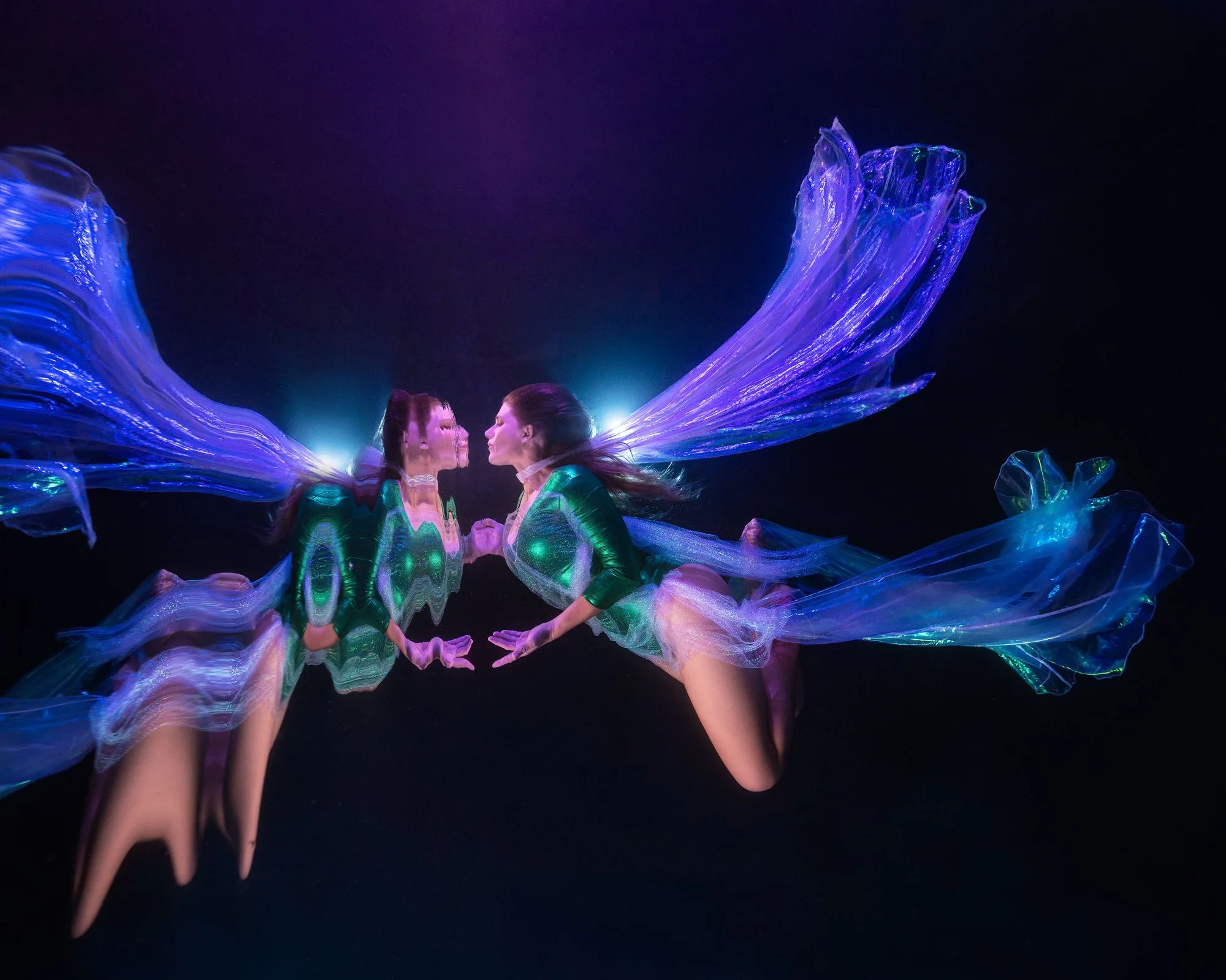
In the studio pool a look can be as clean as a single length of fabric against a black backdrop, or as full as a printed scene of a coral reef, a garden or a shipwreck, with props and flowers in the water around you. Tell us your colors and the mood you’re after, and we’ll suggest the backdrop that suits them.
What to wear
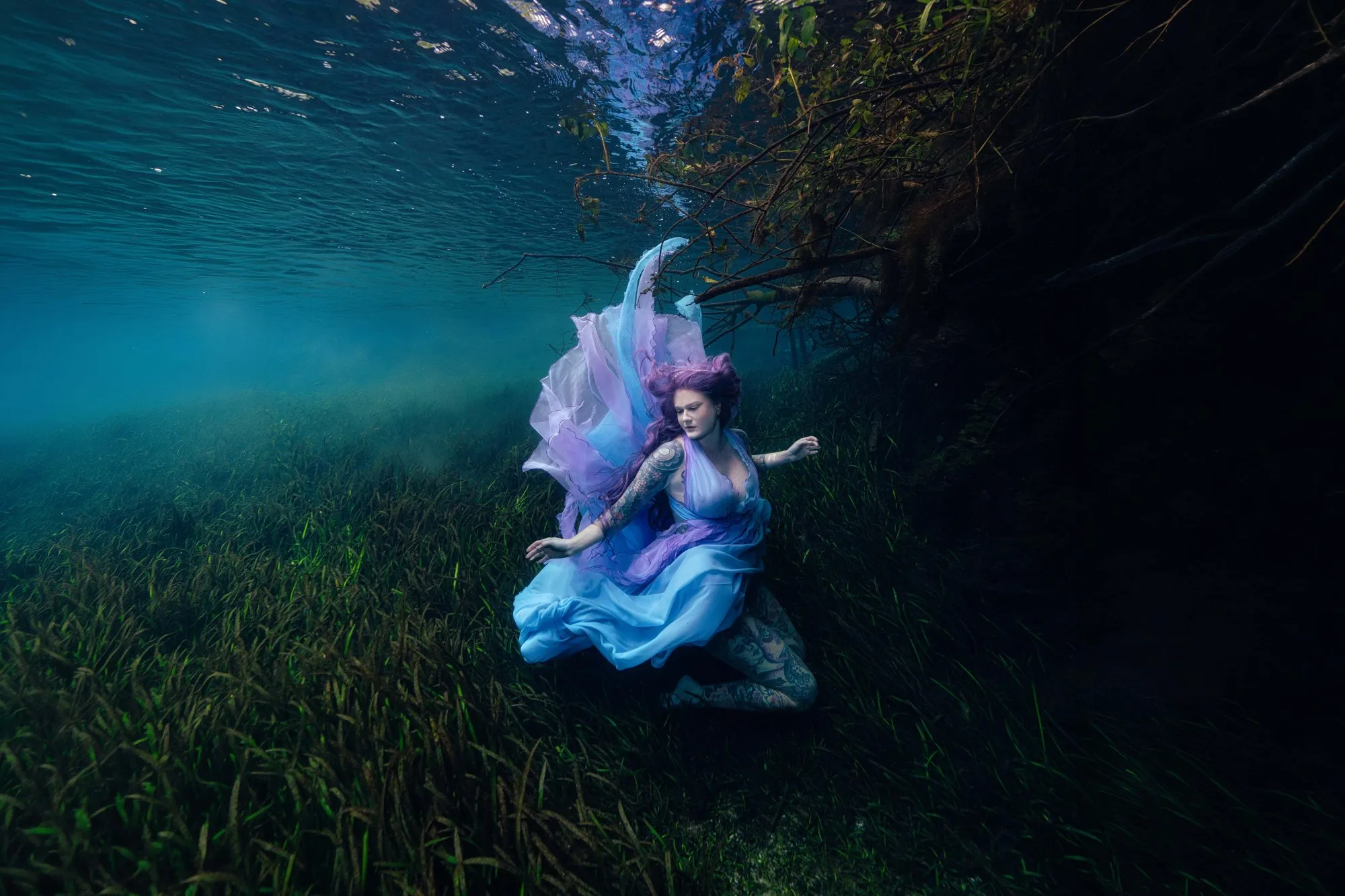
Fabric moves differently underwater than it does on land, and your hair lifts and swirls too. Tell us what you’re planning to wear and we’ll tell you how it’s going to move once it’s wet.
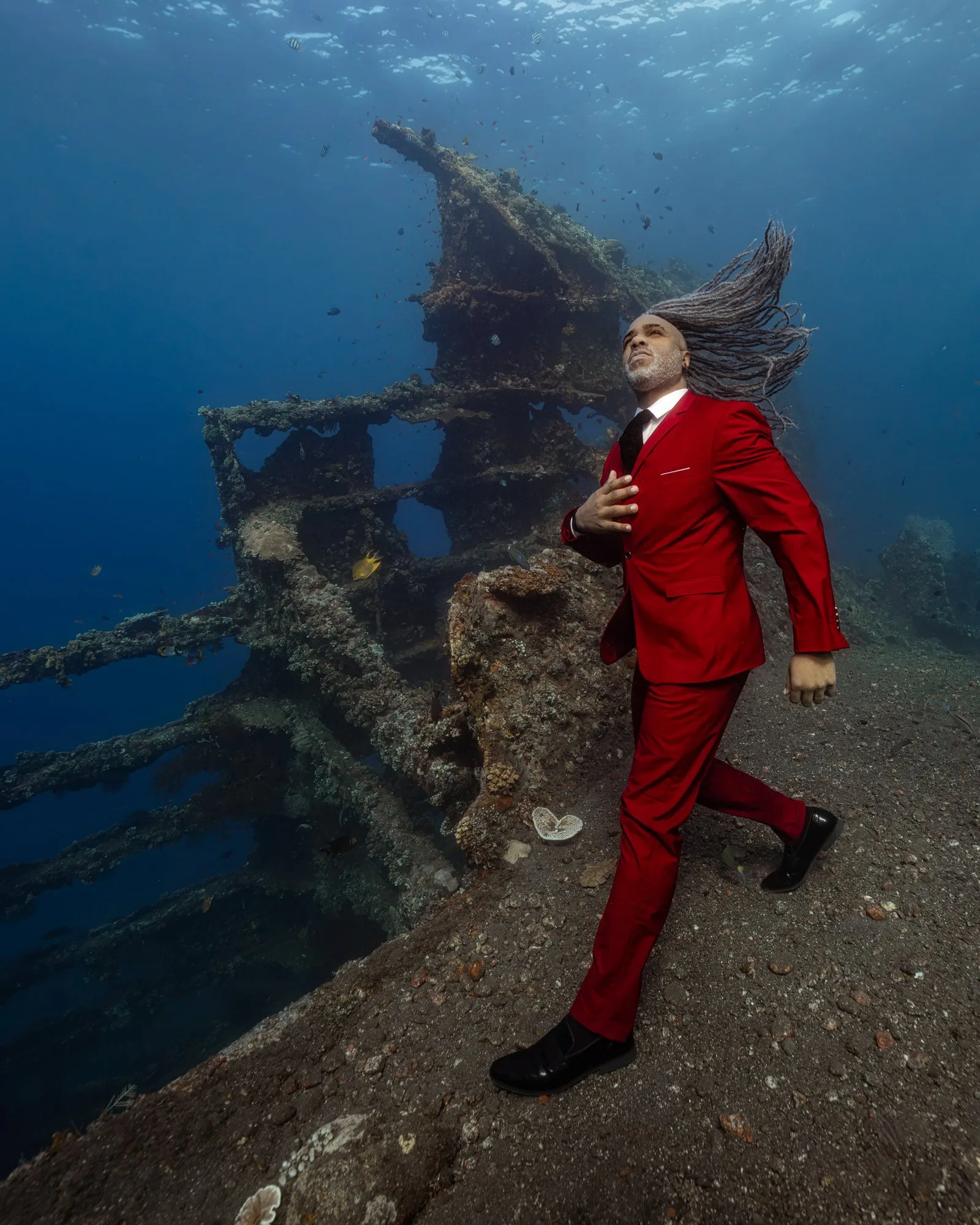
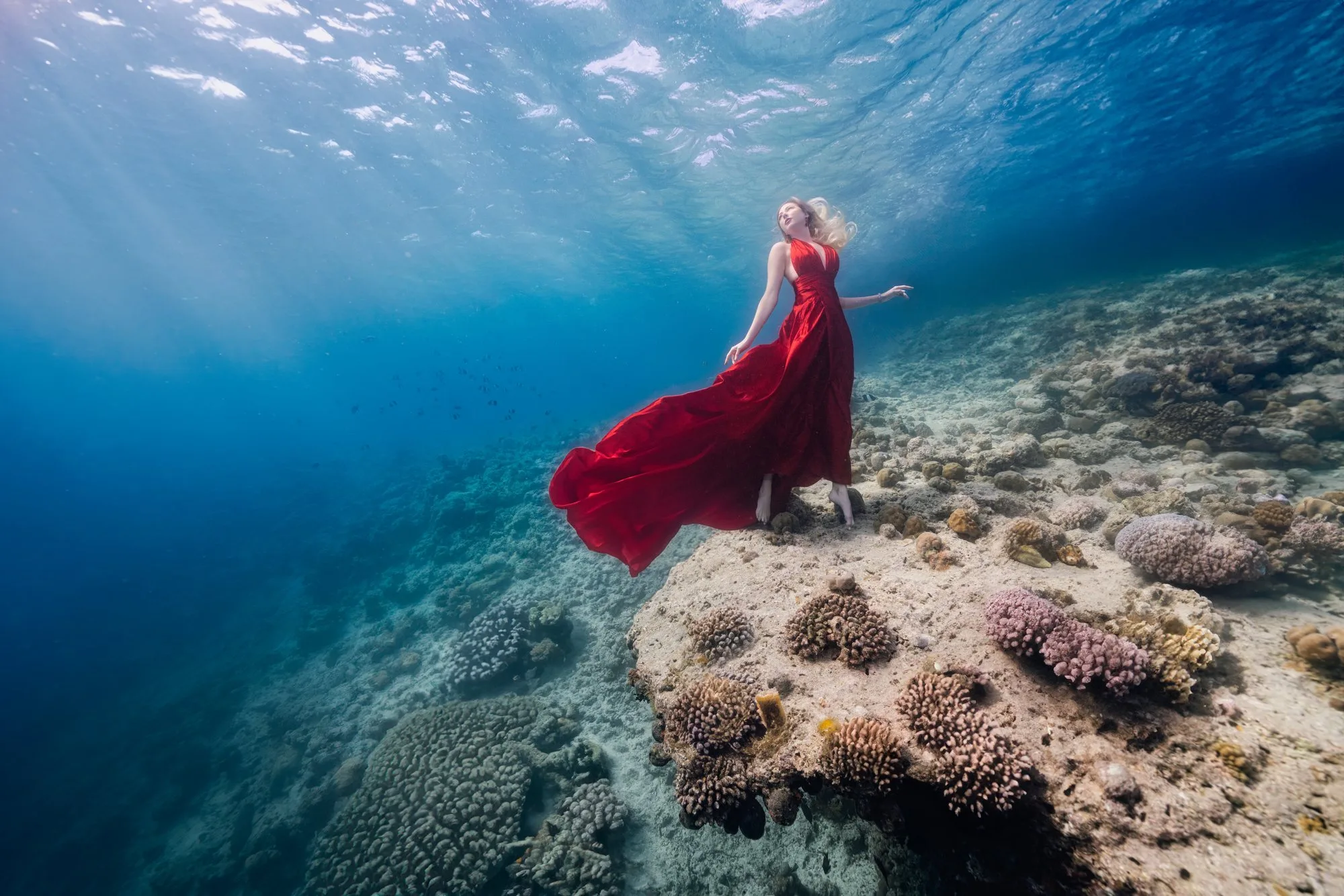
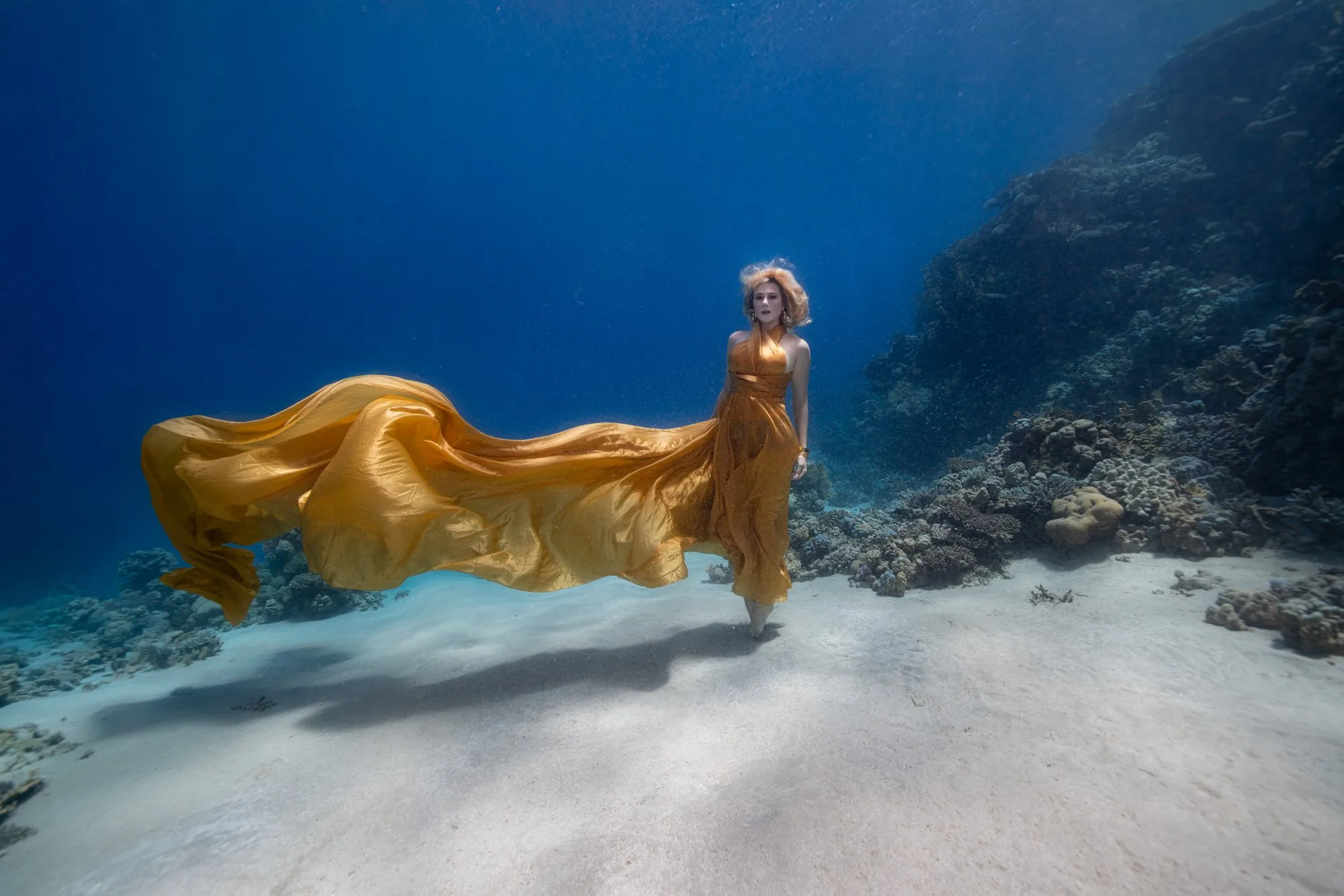
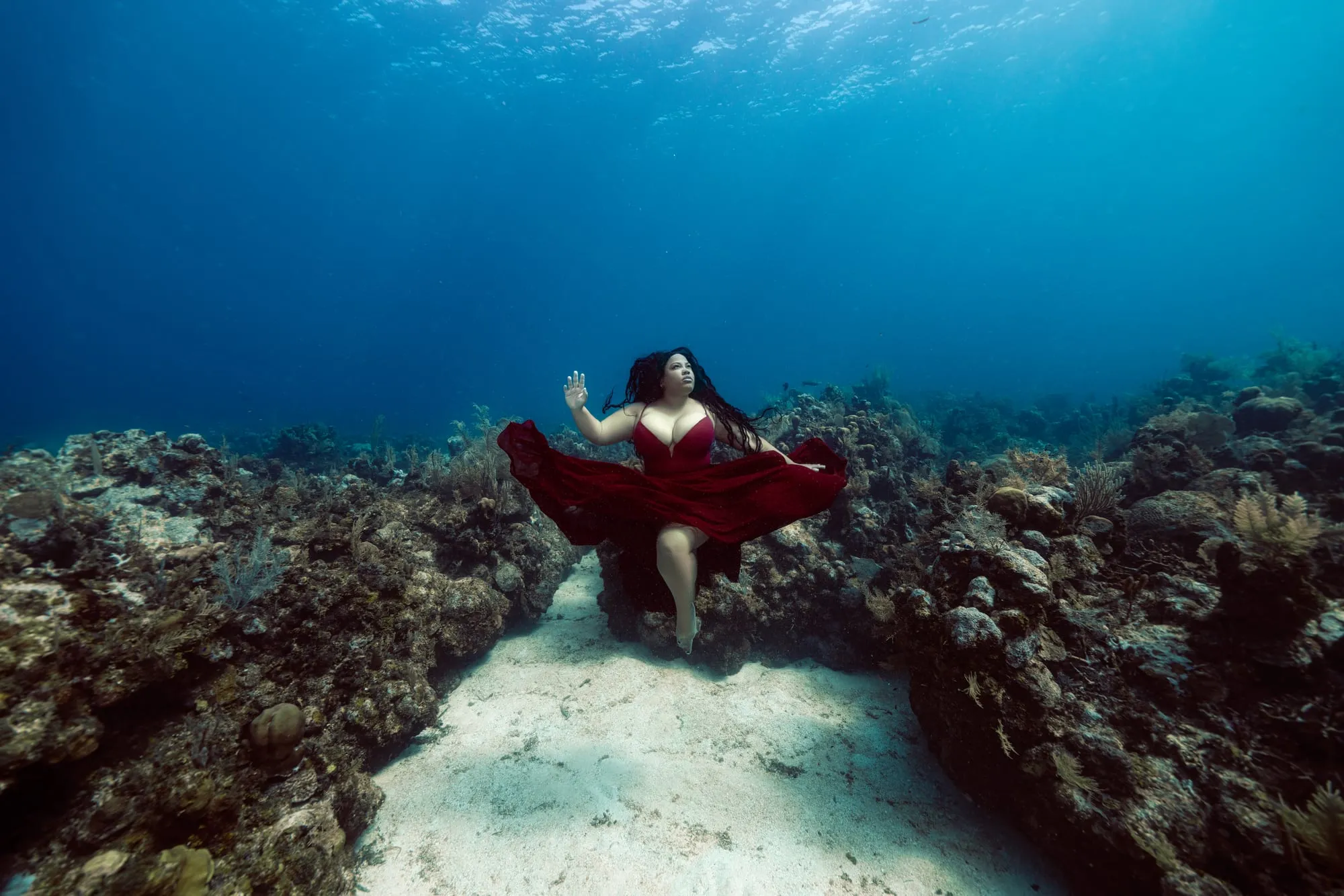
Vibrant, saturated colors pop best underwater, and warm ones most of all, red above the rest. Red is the first color to fade as you go deeper, so it holds its strength closest to the surface. Cooler colors make a subtler, quieter picture. Every color has a place, and the right one depends on the concept and the setting, so we make our recommendations when we plan your session together.
Fabrics that fly
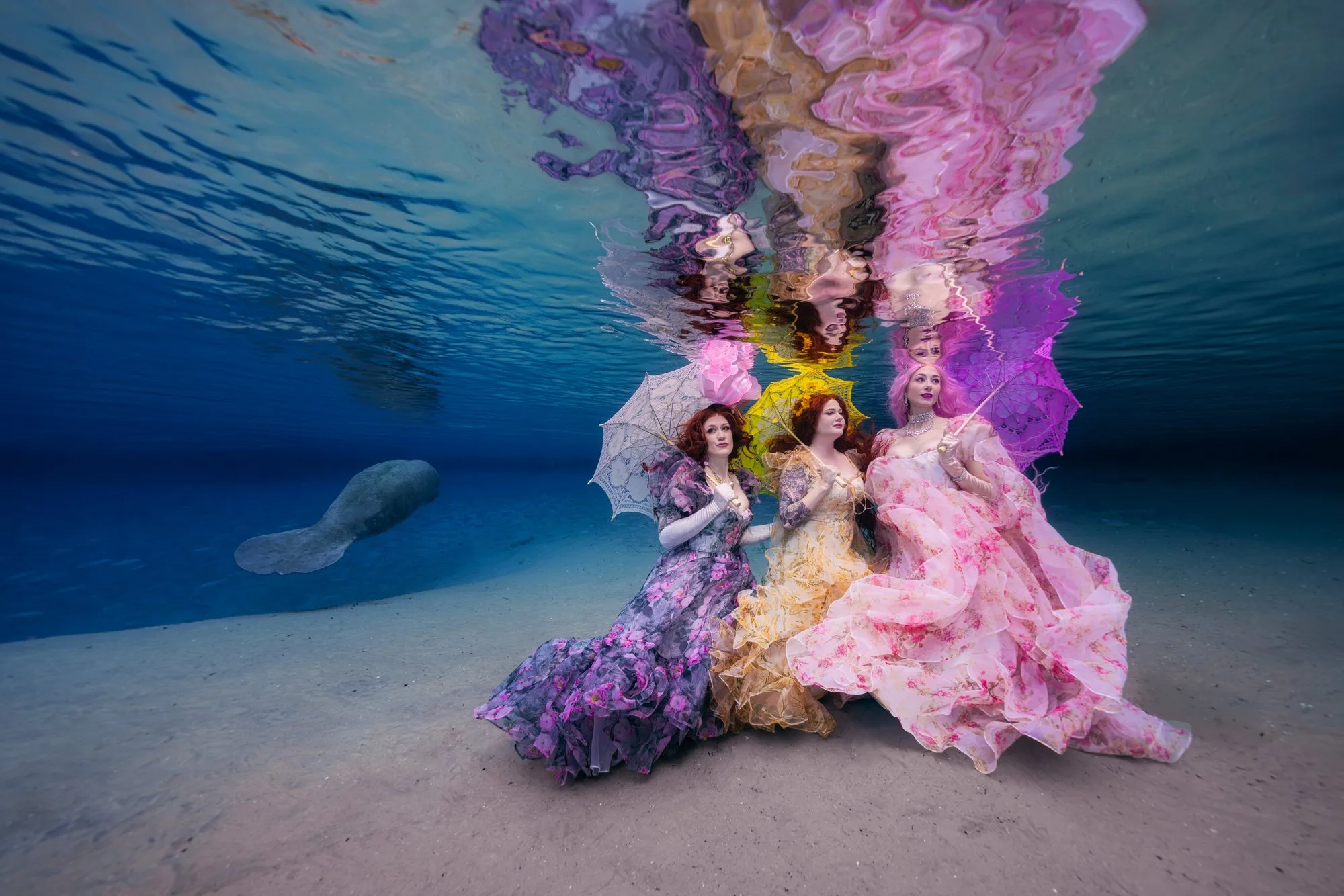
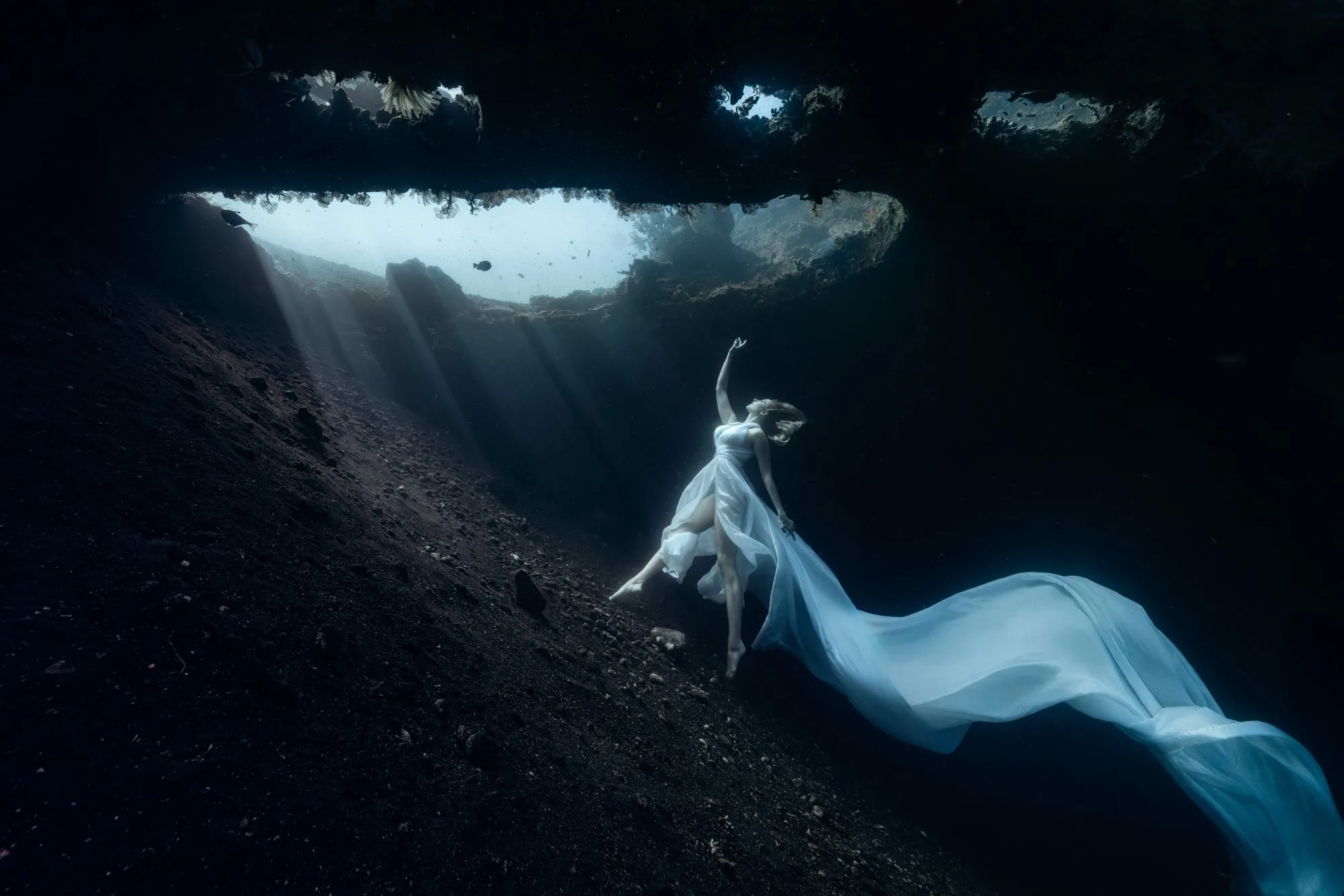
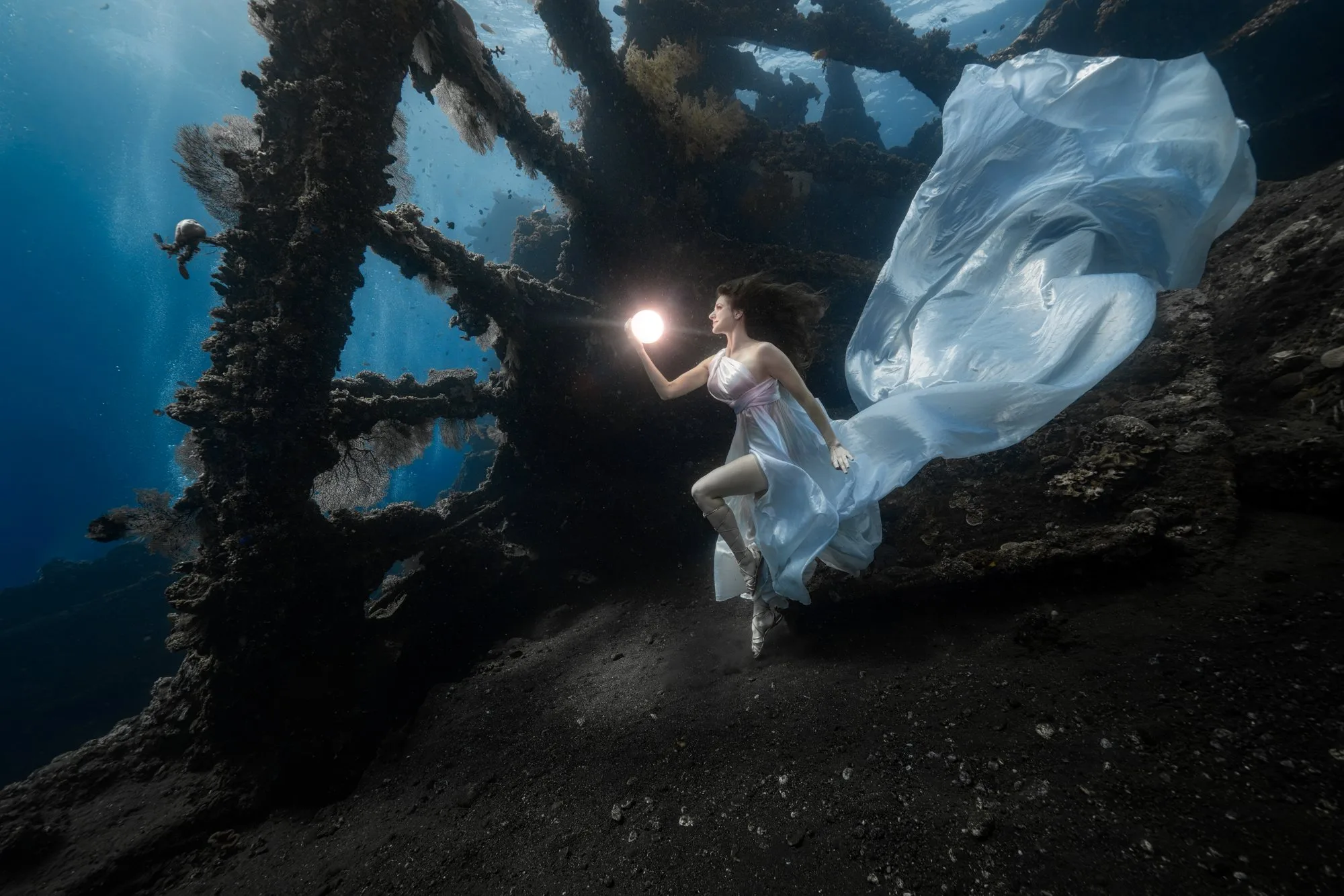
- Chiffon, tulle and organza drift and bloom around you
- Ruffles and long gowns billow
- Lightweight fabric moves most gracefully
- Heavy fabric weighs you down once it’s wet, so leave it at home
Looking after your outfit
- A look spends about half an hour in the water
- Rinse it in fresh water straight after, and launder it soon after
- If a dress is irreplaceable, tell us before you book and we’ll plan around it together
We help you put the look together on the call, whatever you’re wearing. Brides usually wear their own gown and cosplayers their own costume, so tell us the character and the moment you want. For mermaid sessions we have tails too, or bring the one you love: a tail changes how you move, and movement is the first thing we coach.
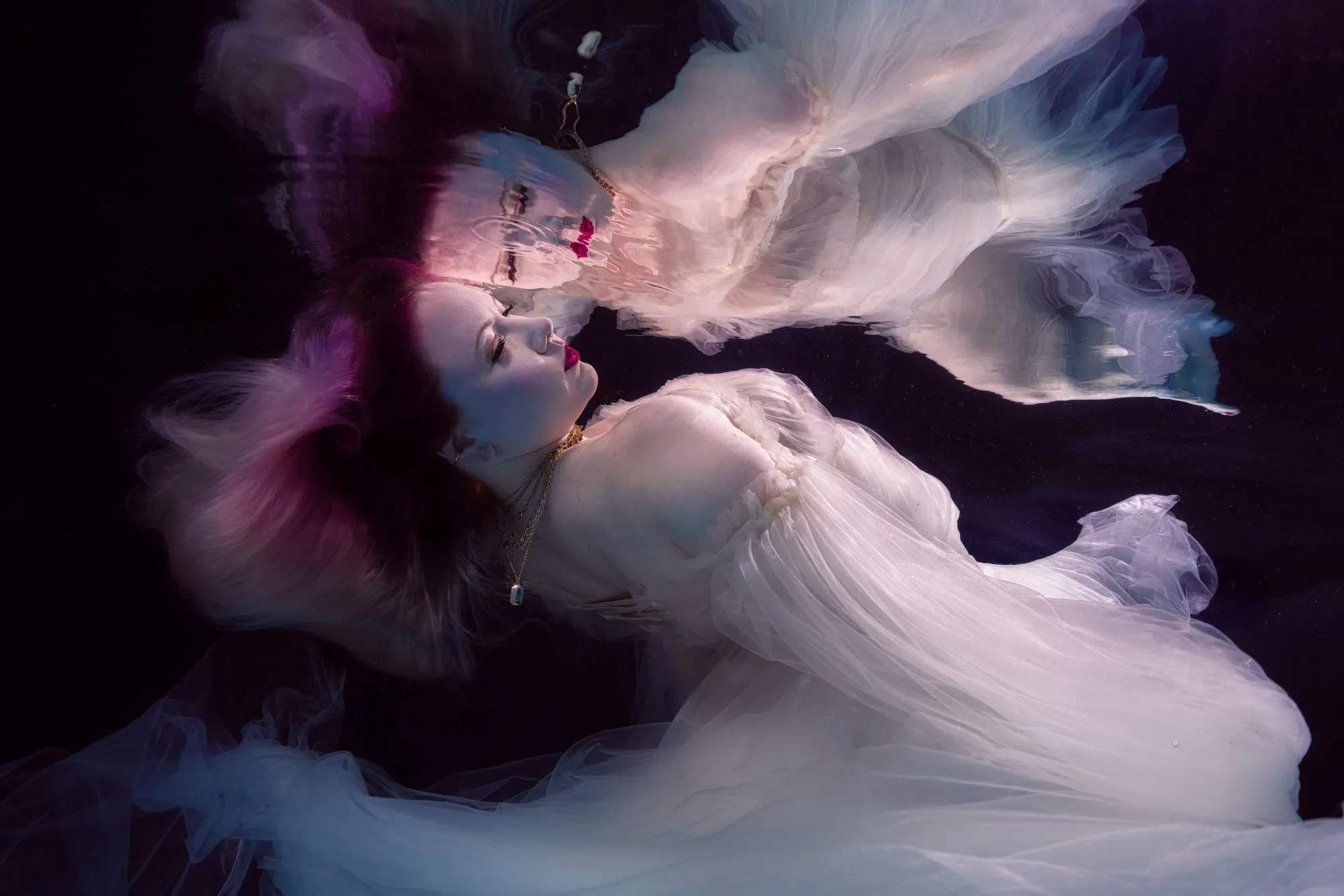
Get your hair and makeup ready for the water
Waterproof makeup is a must, set with a high-quality setting spray. For hair, loose styles look best, free to lift and drift in the water around your face. Try to arrive camera-ready, with your hair and makeup done, so we can jump right in with only a few minor touch-ups right before we shoot.
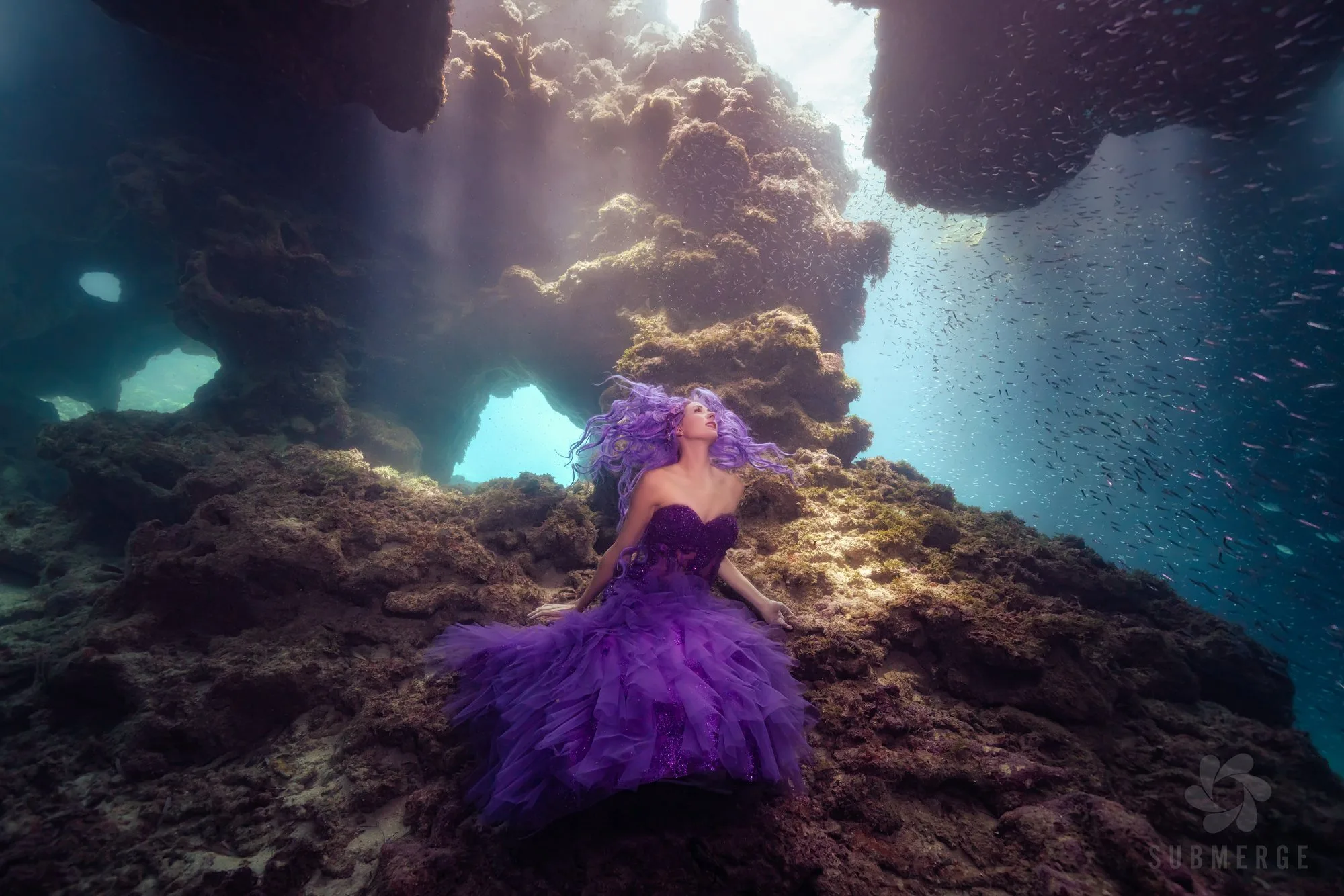
Wigs work underwater, and we use them all the time. Abbey has plenty of tips on choosing and styling one, and we’re glad to go through them with you on the call.
If you’d like the full treatment, we book a professional hair and makeup artist for you on request, one who specializes in waterproof styling, and we schedule their time before your session.
If you’d rather do it yourself, Abbey wrote a hair and makeup guide with the waterproof products she uses herself, options for every budget, and tips for lashes.
What to bring on the day
In your bag
- Your looks, plus any props or accessories you’d like to try
- Waterproof or long-wear makeup for touch-ups
- A brush or detangler
- Eye drops, and a spare pair of contacts if you wear them
- A bag for your wet wardrobe
- A change of dry clothes
- A robe or an oversized sweater to throw on between looks
Already there
- Towels
- A private changing room, a bathroom and a shower
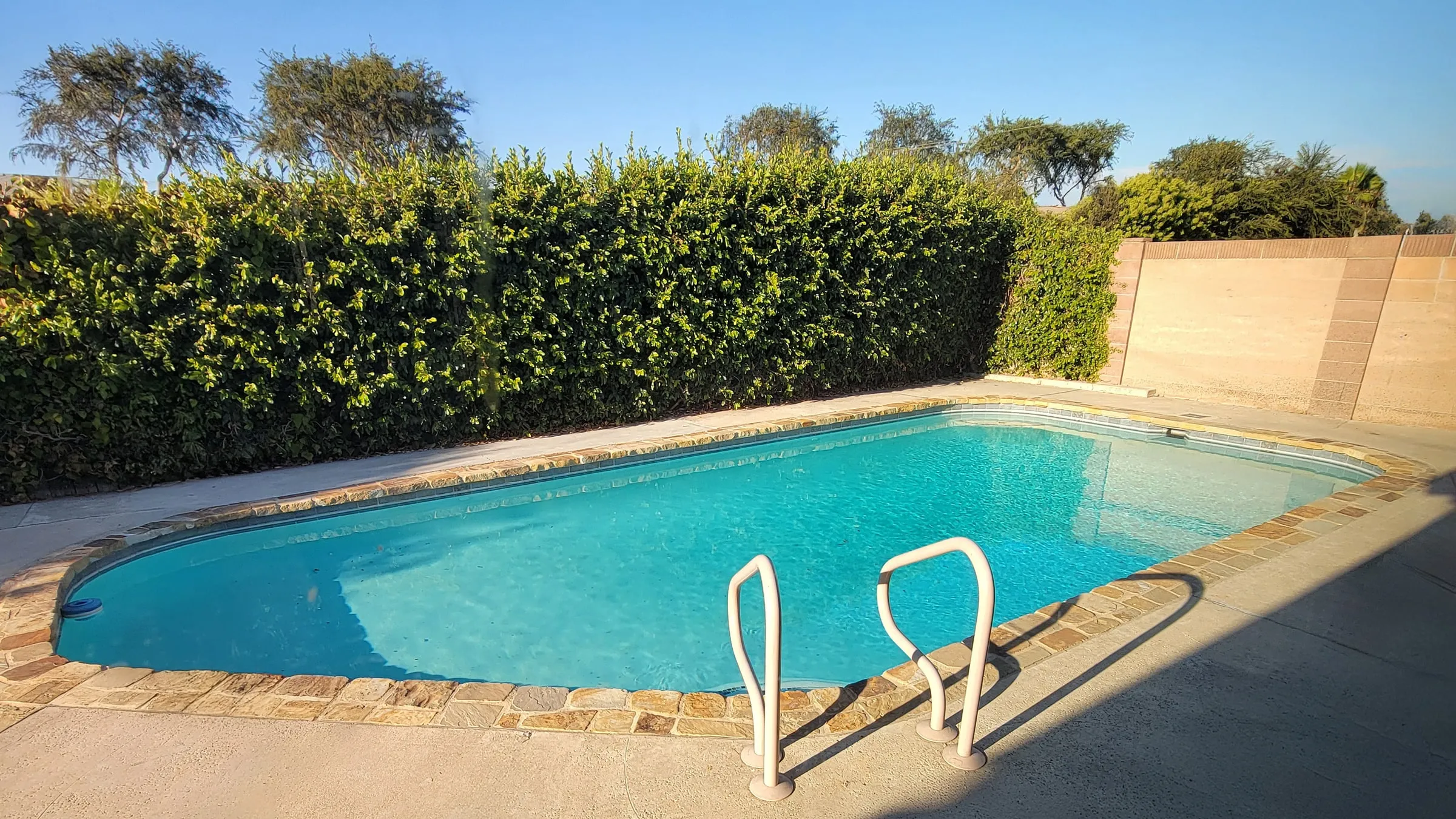
- A 90°F pool and your music, played underwater
Getting ready, body and mind
If you’d like to arrive a step ahead, an apnea trainer app such as STAMina gives you easy, guided breath-hold sessions to do at home, sitting comfortably on dry land. A few relaxed minutes a day in the week before is plenty.
Your eyes will be open for most frames. The studio water is balanced to be gentle on them, and ocean saltwater and fresh spring water are gentler still. We suggest eye drops before and after your session, and if you have a pool you can use, practice opening your eyes and softening your face underwater. Contact lenses are fine to wear, and daily disposables are the easiest.
A calm routine for the day
- In the morning, a little stretching, yoga or slow, deep breathing settles your mind and body.
- Through the day, drink plenty of water and keep meals light. Beyond that, do whatever your body needs to feel healthy and relaxed.
- In the water, a few deep breaths between frames slow your heart rate and keep you grounded.
- In each frame, float freely, move slowly and soften your expression.
- Between looks, change, relax and warm up in your robe.
- Throughout, let go of perfection. It can take a few tries to catch a frame, and we keep going until it’s right.
Come as you are, ready to try new things
We want you to feel safe and open, in a space where you can be creative and try new things. The best underwater pictures come from people who relax into the water, and there’s never any pressure to perform: we take care of the safety, so all you have to do is be open.
Say yes to the pose that sounds a little strange, the prop you hadn’t planned on, the idea one of us throws out between frames. Justin and Abbey work with you through every shot, and the frame nobody planned is often the one people end up printing.
Posing tips to carry in
- Point your toes Extended toes finish the line of the leg and make every pose look longer.
- Relax your face A soft expression is what makes a frame look serene.
- Find the light Turn toward the light coming down from the surface, and we’ll show you where it falls.
- Make triangles Angles with your arms and legs give a pose shape and keep it from looking flat.
- Move slowly Slow, deliberate movement lets your fabric and hair follow.
- Exhale to sink A gentle exhale before and during your descent lets you sink and hold a pose.
Your day in the studio
When you arrive
Arrive as camera-ready as you can, wardrobe included, though none of it is crucial: you can come already dressed or change in our private changing room. The studio is our private pool in Fullerton, heated to 90°F so you stay warm from the first frame to the last. The water is chemically balanced and monitored around the clock, and the pool runs from a shallow end of about three to four feet down to eight and a half feet at its deepest. Justin and Abbey are both certified lifeguards.
Tell us the music you love and we play it underwater through our Oceanears sound system while you work. A screen at the edge of the pool shows the frames we just shot.
How long a session takes
Plan on two to three hours for a studio session, depending on how many looks you shoot. A look takes about half an hour in the water. Between looks you get out, change and relax before getting back in, so the day has a gentle rhythm of work and rest. Wrap up in your robe and look at the frames on the screen while you warm up.
Your first few dips
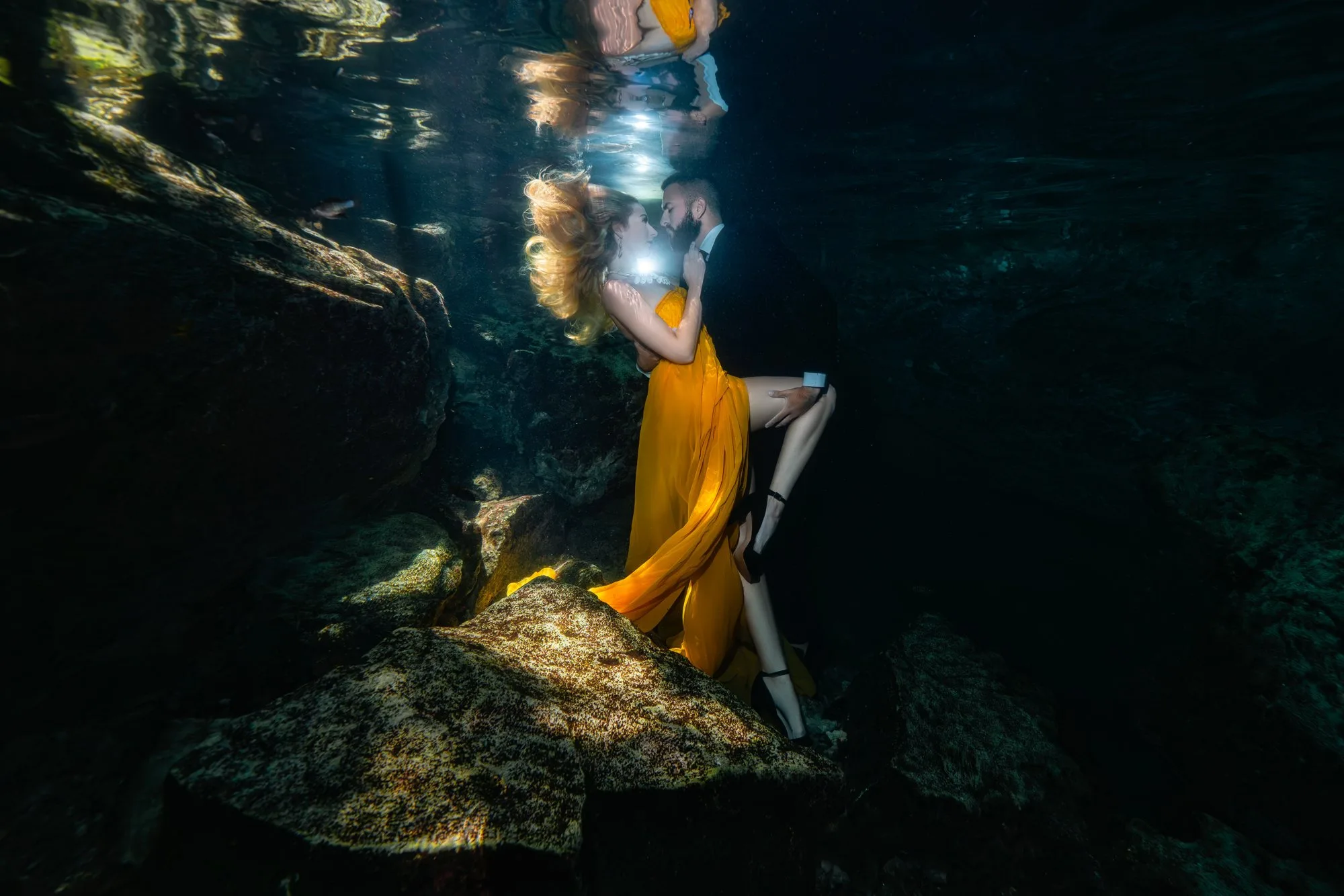
Abbey, a PADI Mermaid Instructor who spent years teaching children to swim, teaches you the breath-hold and the posing on the spot: where to look, how to position your body, how to relax and let the water move you. A frame takes a few seconds under the surface. Then you come up, hold onto the float, and rest for as long as you like before the next one. You go down when you’re ready and come up whenever you want. The best images happen right under the surface, where we capture the best reflections, so you never need to go deep.
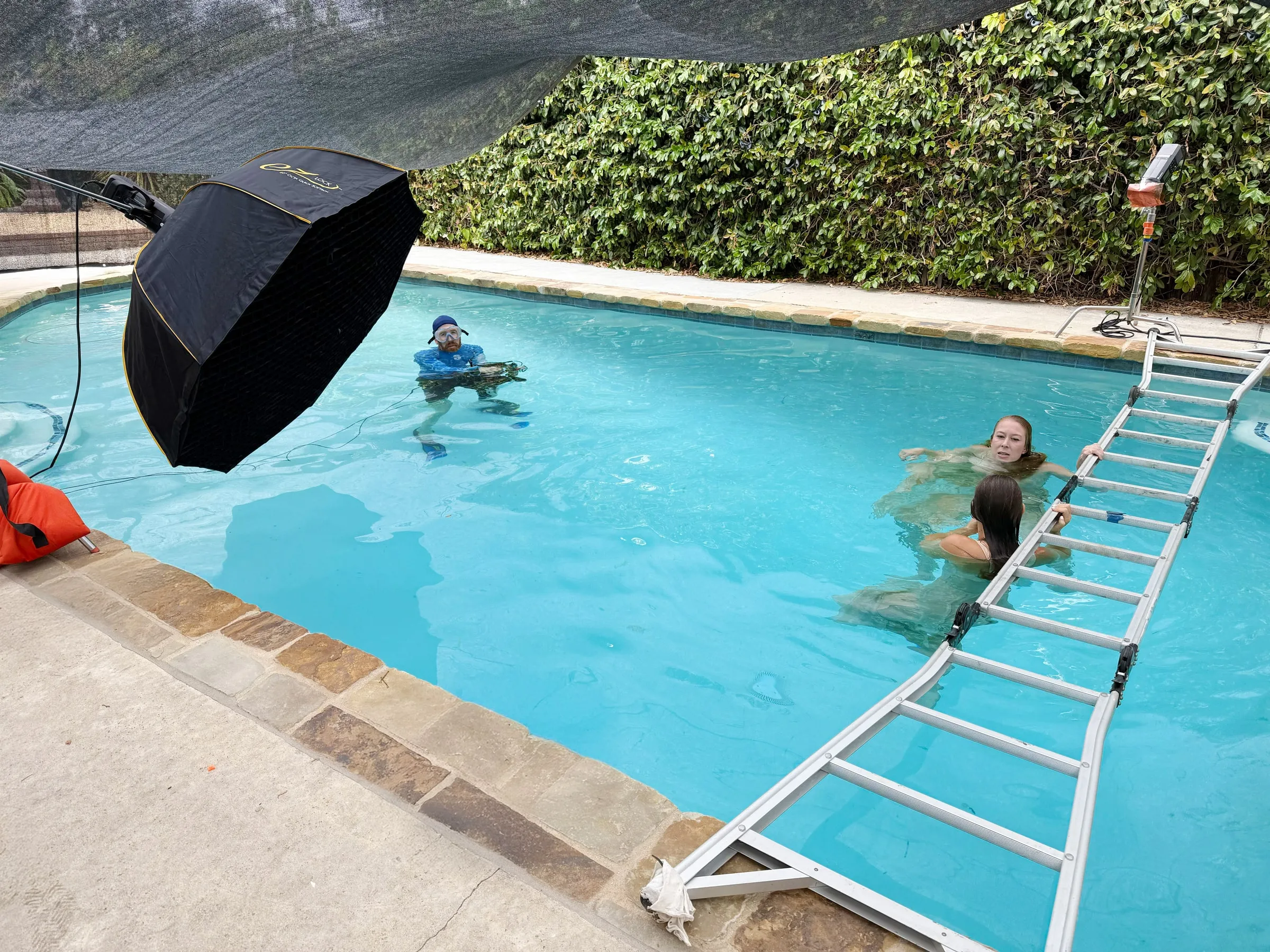
After the first few dips the frames start coming up on the screen, and seeing yourself in them is usually when it clicks. By the end of a session, how you look and move underwater is night and day from where you started, and most people tell us they could have stayed in all day.
Friends and family
Friends and family are welcome, bridesmaids included. At the studio they can settle into the living room next door, dry and comfortable, and watch the whole session live on the big screen. If you’d like someone in the frame with you, we coach you together. Justin also has a tradition of taking a selfie with every client, so be ready for one.
If your session is a little different
On location
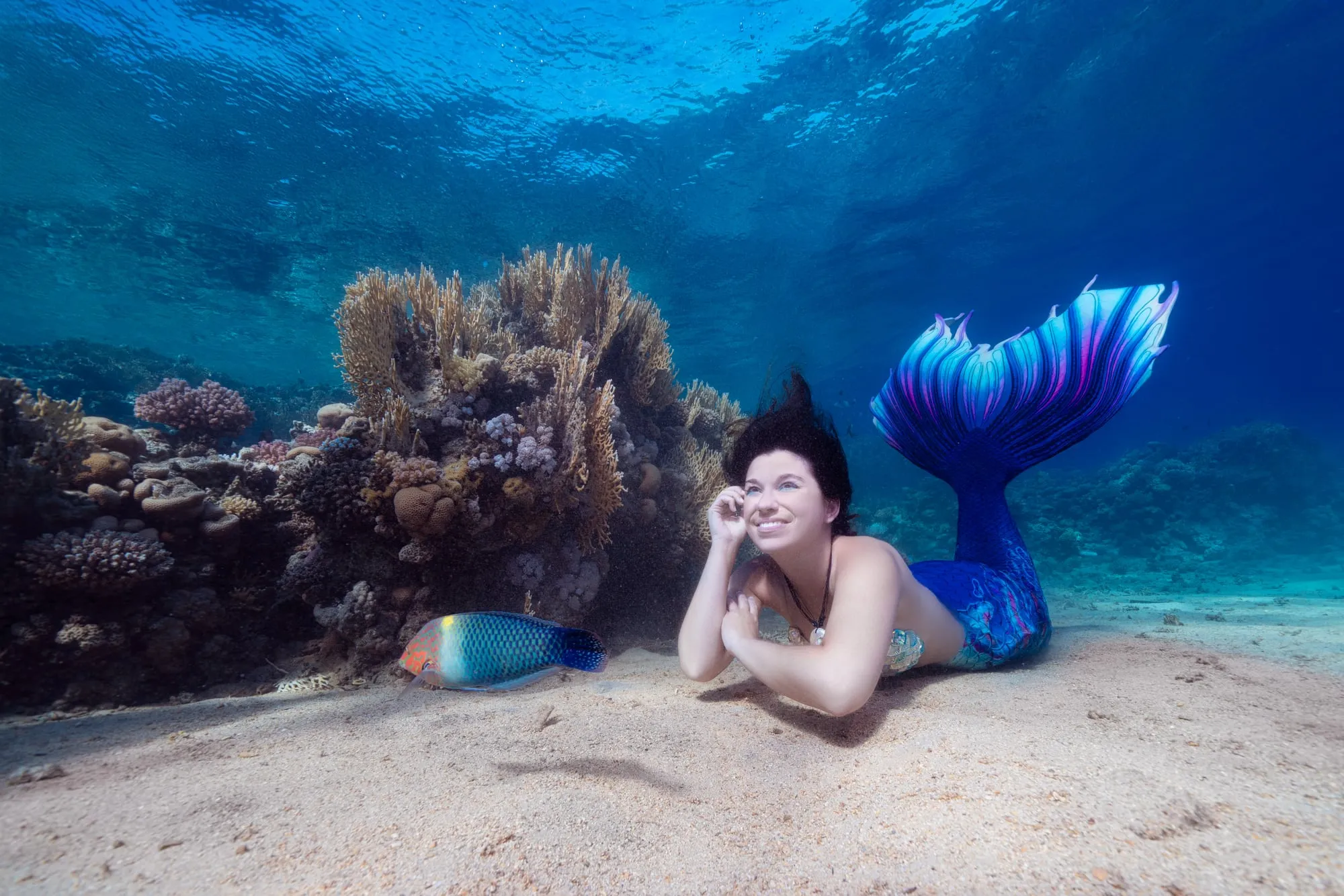
Every client rehearses in a pool before an open-water session. An ocean session runs somewhere we have already dived and scouted, with a team of safety divers sized to the location. If you’re shooting on scuba, a classroom session on breath-hold, buoyancy, posing and how we talk to each other underwater comes before the pool. On location, Justin shows you frames on his camera monitor whenever possible.
If you’re expecting
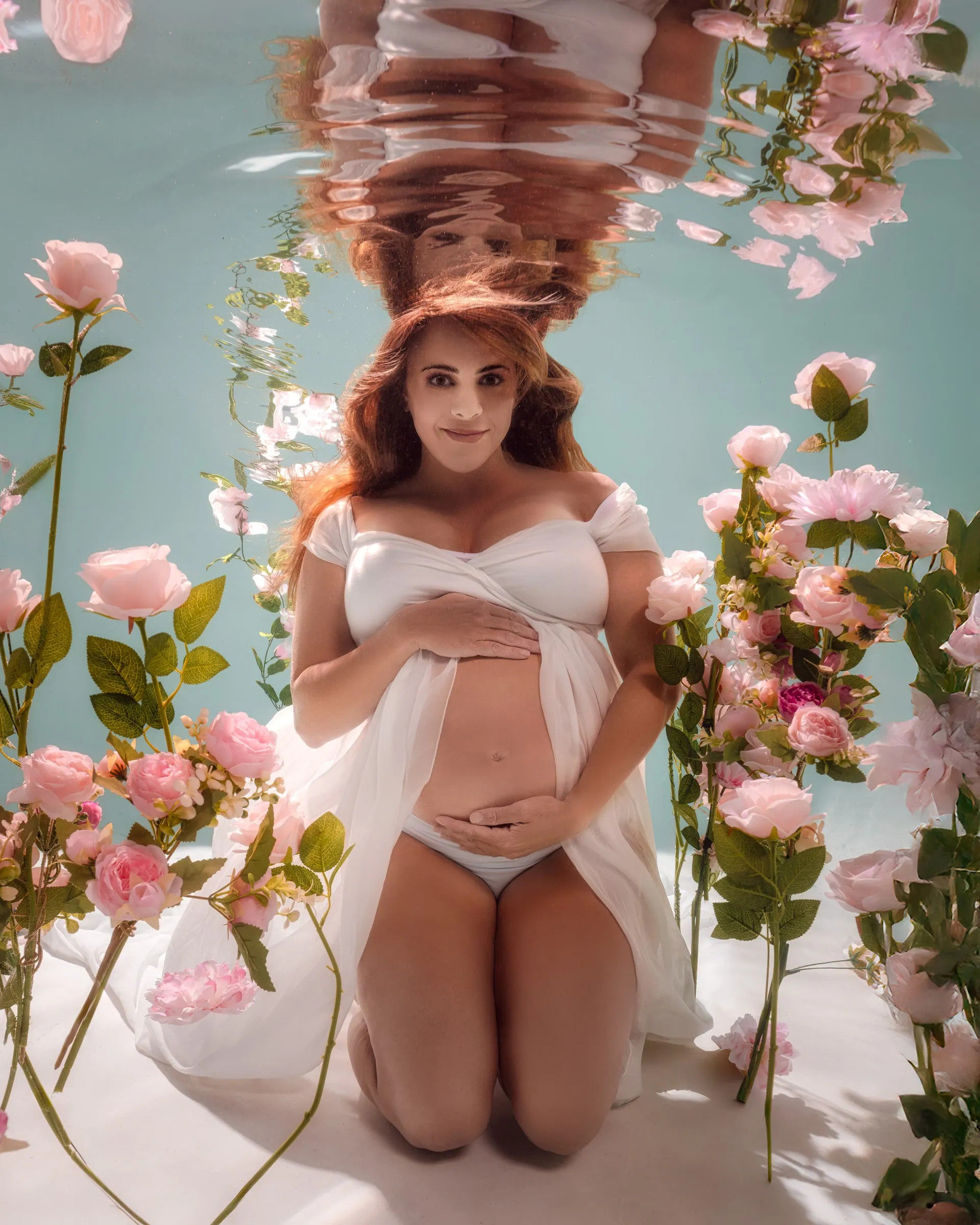
Ask your own doctor before you book, and tell us your due date as early as you can. The best time to shoot is when your belly looks the way you want it in the pictures, and we’ve photographed mothers the week before their due date.
A maternity session is gentle: there’s something at the surface to hold onto between dips, and your partner is welcome in the water with you for your first family portrait before the baby arrives.

Choosing your favorites
We film behind the scenes at every session, above and below the water, and you can add the footage to your session as raw clips, an edited reel or both. Your private proofing gallery goes up within a week, with every frame from the session. You pick your favorites, every one you choose goes through our creative editing, and the finished images follow four to six weeks after you’ve made your selections.
These images are made to hang on a wall. Once you’ve chosen your favorites, we’ll help you plan prints on canvas, on metal or framed behind glass, and we can show you what a piece will look like in your own space before you order.
Ask about a session
Tell us the picture you’re imagining. If you don’t have one yet, we’ll find it together on a call. You’ll be talking to Justin and Abbey, the same two people who’ll be in the water with you.